
Starting a Salon Business
How to Start a Hair Salon in 2027: Costs and Opening Checklist
Plan your salon opening with an illustrative startup budget, a break-even example, a business plan outline and a practical checklist before your first booking.
By Dhaval Prajapati · Published · Updated
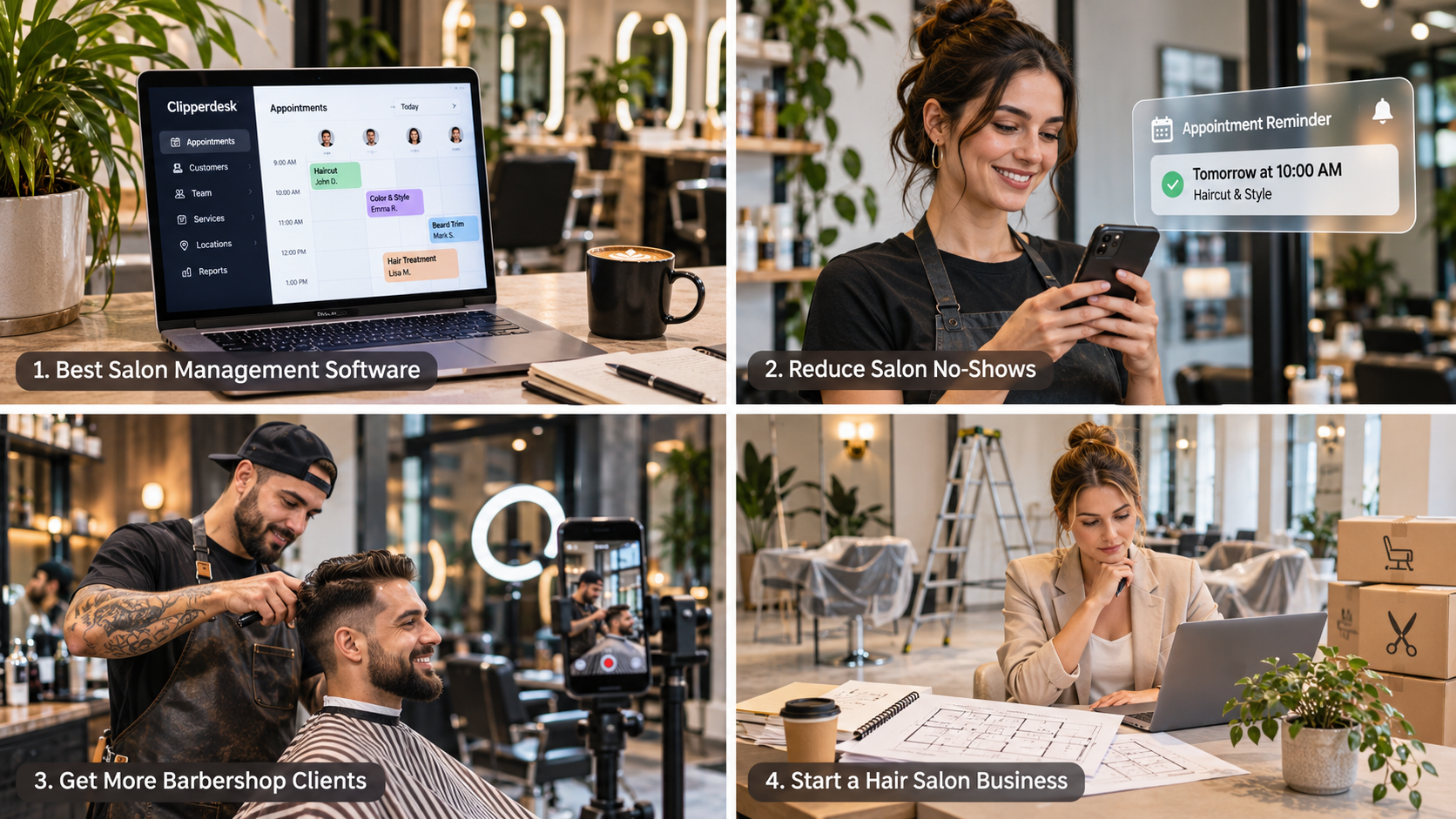
Starting a hair salon means turning your service skills into a workable business: choose the clients you want to serve, check that the premises and permissions fit, build a realistic budget and test the booking-to-checkout journey before opening.
If you are planning a 2027 launch, use the checklist below to organise decisions and obtain current local quotes. There is no single startup cost that applies to every salon. The dollar figures here are hypothetical US-dollar planning examples, not market averages, supplier quotes or forecasts for 2027.
1. Choose the business model and clients you will serve
A salon suite, independent high-street salon and chair-rental business have different space, staffing and cost structures. Define the services you will personally provide, the experience clients should expect and which responsibilities belong to employees or independent professionals.
Write a short concept statement: who the salon serves, its location, core services and why a client would choose it. Research nearby menus, opening hours and customer feedback, then speak with prospective clients about unmet needs. Keep assumptions separate from what you have verified.
2. Build a startup budget from local quotes
Separate one-time opening costs from recurring monthly expenses and the cash needed while bookings build. The US Small Business Administration's planning resources explain startup cost categories and break-even planning.
Here is an illustrative opening budget for a small US salon. Replace every figure with a dated estimate for your own location and service menu.
Lease deposits and initial rent: $6,000.
Renovation and interior setup: $20,000.
Styling chairs and mirrors: $8,000.
Wash stations and plumbing: $6,000.
Tools and equipment: $4,000.
Opening product inventory: $3,000.
Licences, insurance and professional fees: $3,000.
Website, branding and launch marketing: $2,500.
Initial technology and setup: $1,500.
Working capital reserve: $15,000.
Illustrative total: $69,000, comprising $54,000 in opening items and a $15,000 reserve. This is not an exhaustive allowance. Check delivery, installation, taxes, accessibility work, financing costs and contingency separately. The reserve must be tested against your expected cash shortfall; its presence in this example does not mean it will be sufficient.
For each item, record the amount, currency, what is included, payment date, quote expiry and whether it is confirmed. Build a monthly cash-flow plan as well as a startup total, so an early supplier payment does not leave you unable to cover rent or wages later.
3. Check premises, licences and insurance before committing
Contact the relevant professional licensing authority and local business, planning and safety offices. Confirm that the intended services can operate at the address and what approvals are required for the premises and people delivering them.
The SBA's US business launch guidance explains that licensing and permit requirements depend on activity and location. Elsewhere, use the corresponding national, regional and local authorities. Do not assume a business registration is the same as permission to perform a regulated service.
Check the permitted use, occupancy and any inspection requirements.
Confirm plumbing, electrical capacity, ventilation and accessibility needs with appropriate professionals.
Obtain relevant insurance advice for the services and staffing model.
Check employment, worker-classification and tax obligations locally.
Keep a list of approvals, responsible people and dependencies. Use qualified local advisers for decisions about leases, licensing, employment and tax.
4. Write a business plan you can use
Keep the plan specific enough to guide a decision. Include:
Concept and demand: target clients, location, nearby competition and the evidence supporting your idea.
Service menu: prices, appointment duration, product needs and eligible professionals.
Operations: opening hours, roles, booking, cancellations, checkout and responsibilities.
Marketing: how clients find you and how an enquiry becomes a confirmed booking.
Finances: opening costs, monthly costs, cash flow and scenarios with fewer bookings than expected.
Milestones: premises, approvals, equipment, recruitment, testing and opening.
Review the plan when a major quote or assumption changes. A lower fit-out cost does not compensate for a service menu that cannot cover the ongoing costs.
5. Calculate break-even and check the time required
Break-even appointments = monthly fixed costs ÷ average contribution per completed appointment. Contribution is appointment revenue less the costs that vary with that appointment.
Suppose fixed costs are $8,000 a month, average appointment revenue is $65 and variable cost is $15. Contribution is $50, so the simplified break-even point is 160 completed appointments per month. Across 25 operating days, that averages 6.4 completed appointments a day.
If only 90% of bookings become completed visits in a hypothetical scenario, you need at least 178 bookings to reach 160 completions. That 90% is an assumption for the example, not an attendance benchmark.
Now check the calendar: can your qualified team deliver those services within the available working time, allowing for breaks and cleanup? Include fixed compensation in fixed costs or appointment-related compensation in variable costs without counting it twice. Tax, financing and owner-pay treatment require a fuller plan with your accountant.
6. Set up the service menu and team before promoting bookings
Define what each service includes, its realistic duration, price and staff requirements. Schedule breaks and time off. Order essential equipment against that menu rather than buying everything before you know what you will offer.
For software, follow our salon management software buying checklist. Test the booking, calendar and checkout work you need rather than choosing from a feature count. ClipperDesk's salon workflow overview explains its current fit.
7. Prepare your website and opening campaign
Publish accurate service information, prices, location, opening hours, contact details and photographs you have permission to use. Share a booking link only when the business is ready to honour the available times.
Test a new-client booking on a phone and check the confirmation. Our online booking setup checklist covers the business, service, staff and policy details to prepare. In ClipperDesk, online deposit collection is currently unavailable; clients with a deposit-required booking must contact the business to finish.
For eligible in-person salons, check Google's Business Profile eligibility rules before creating a local listing. Keep launch dates accurate and ask for honest reviews after actual visits.
Before your first client: salon opening checklist
Confirm your concept, service menu and local demand.
Replace the sample budget with current local quotes and a cash-flow plan.
Confirm premises suitability, required approvals and insurance.
Prepare equipment, cleaning arrangements and supplier orders.
Set staff responsibilities, qualifications, hours and breaks.
Publish clear prices, cancellation terms and contact details.
Test booking, appointment changes, arrival, service and checkout.
Practise handling a late client, an absent professional and a cancelled visit.
Assign a person to the first-day schedule review and closing checks.
After opening, use our daily salon operating guide and no-show reduction plan to turn the opening checklist into repeatable routines.
Common questions
How much money do I need to open a salon?
Build a location-specific total from the premises, services, equipment and staffing you need, plus the cash shortfall while bookings develop. The $69,000 example above is a worksheet illustration, not a recommended amount.
Can I own a salon without being a licensed hairstylist?
Ownership rules and permission to perform services are jurisdiction-specific. Ask the relevant authority about your exact business model before investing.
How long does opening take?
Create a schedule from the actual premises work, approvals, recruitment and supplier lead times. Do not promise an opening date until the critical dependencies are understood.
Try the workflow with your team
See how ClipperDesk connects booking, staff schedules and client records. Check the fit with your services before choosing a subscription.
Published by ClipperDesk. Worked examples are illustrative unless identified otherwise; this guide does not claim independent product testing or guaranteed business results.