
Client retention
How to Increase Salon Rebooking: Scripts and a 30-Day Plan
Turn more salon visits into repeat appointments with practical checkout scripts, a clear rebooking-rate formula and a measurable 30-day action plan.
By Dhaval Prajapati · Published · Updated
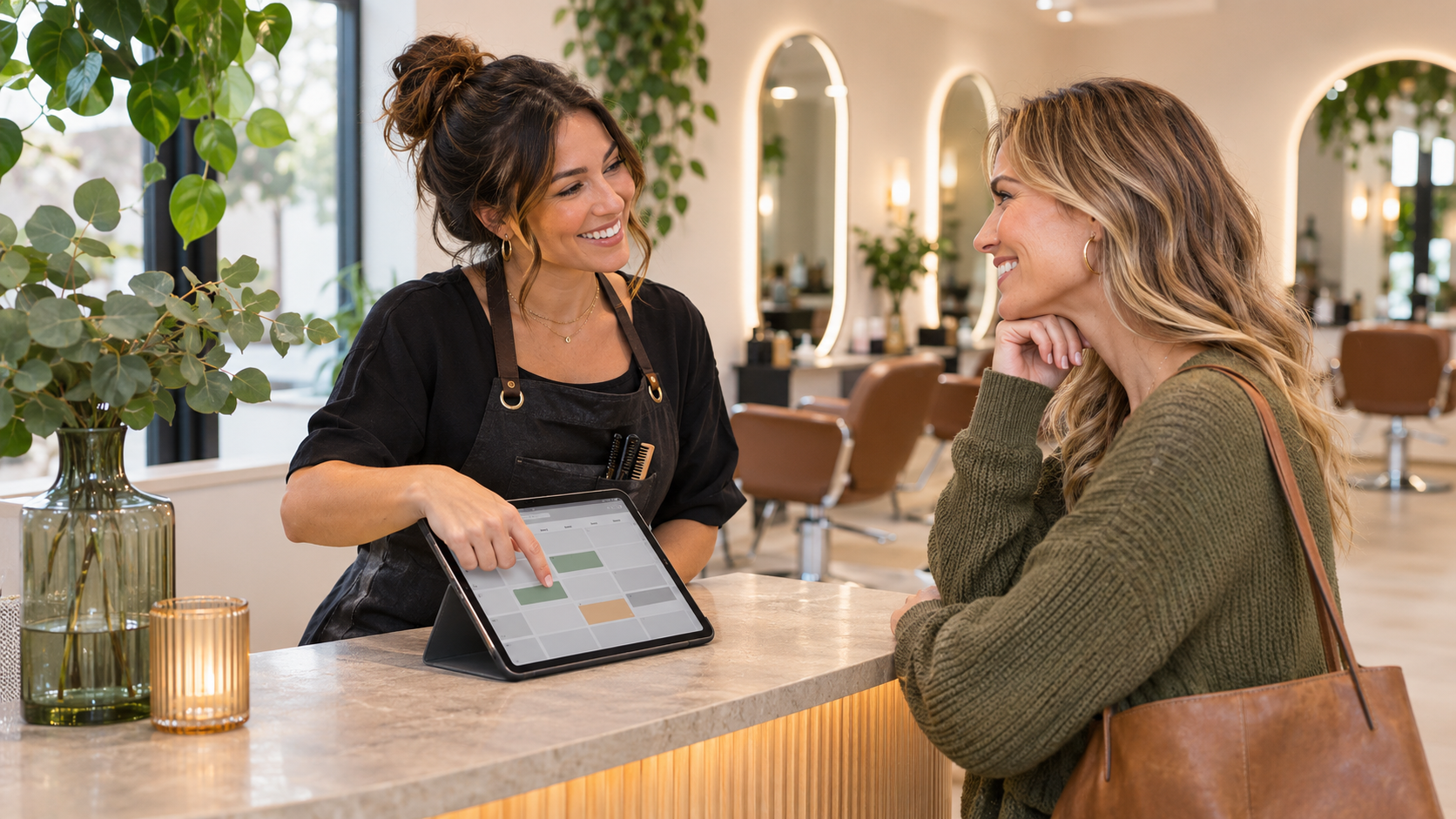
Getting a client to return starts before they leave the chair. To increase salon rebooking, recommend a suitable next-visit window, offer two appointment options and make booking a choice rather than a pressured sale. Then measure whether those appointments become completed visits.
This guide gives salon and barbershop owners a practical rebooking process, ready-to-adapt scripts and a 30-day experiment. The examples are illustrative planning tools, not industry benchmarks or promises of results.
What is salon rebooking?
Salon rebooking means arranging a client's next appointment before or shortly after their current visit. For consistent reporting, choose one definition: this guide counts a rebooking only when the next appointment is made before the client leaves.
Rebooking differs from retention. Rebooking measures the next appointment being scheduled; retention measures clients actually returning over a defined period. A full future calendar can still hide cancellations, so track both.
How to calculate your salon rebooking rate
Rebooking rate = eligible completed visits with a next appointment booked at checkout ÷ all eligible completed visits × 100.
For example, if 42 of 100 eligible completed visits result in a next appointment at checkout, your rebooking rate is 42%. If the next comparable period reaches 50 out of 100, that is an increase of 8 percentage points.
Define eligibility before you begin. You might exclude one-off wedding services or visitors who explicitly say they are travelling. Apply the same rules every week and show exclusions separately. Count each completed visit once, even when the client books several future services. Do not include cancelled visits in the completed-visit denominator.
Also record how many rebooked appointments are eventually completed. Compare groups whose scheduled return dates have already passed; otherwise, recent bookings can make the result misleading.
1. Recommend a return window during the consultation
Connect the next visit to the client's desired result, maintenance preferences and budget. Avoid giving every client the same interval. Ask how they like their hair to look between appointments and explain when you would suggest reviewing the result.
Stylist script: “To keep this shape looking the way you want, I would suggest we check it again in about [agreed interval]. Does that fit your routine?”
For colour or specialist treatments, base advice on your professional assessment, the service performed and relevant product instructions. Do not use a booking target to override appropriate care.
2. Offer two real appointment options
A vague “Would you like to book again?” asks the client to do the planning. Once they agree on timing, offer two available slots with the right service duration and team member.
Checkout script: “We discussed coming back around [date]. Would [Tuesday at 4] or [Saturday at 10] suit you better?”
Confirm the service, expected price, date and time before saving. Explain any applicable cancellation or deposit terms clearly. Never reserve a slot without the client's agreement.
3. Make an uncertain answer easy to handle
Some clients do not know their work schedule yet. A useful alternative is permission to follow up, not repeated pressure.
Flexible-schedule script: “No problem. Would you like us to contact you around [date], or would you prefer to book when you know your schedule?”
Record the preference only where your salon has an appropriate way to do so. Use the client's permitted contact channel and honour opt-outs. Do not treat a declined rebooking as permission to send marketing.
4. Keep the handoff between stylist and reception clear
Agree who makes the recommendation and who confirms the appointment. A short handoff prevents the client from having to explain everything twice.
Handoff example: “We agreed to review the cut around [date], with [service] and [team member]. Could you check two suitable times?”
In a small barbershop, one person may handle both tasks. The same checklist still helps: recommendation, agreement, slot, confirmation. Keep sensitive consultation details out of conversations other customers can hear.
5. Remove booking friction before offering discounts
If clients decline, ask a neutral question: “Is it the timing, the available appointments, or would you simply prefer to decide later?” Note broad reasons without collecting unnecessary personal details.
If timing is the problem, review appointment availability. If clients forget what they booked, improve the confirmation. If prices are unclear, explain them before checkout. A blanket discount may reduce the value of visits that would have happened anyway.
If you test an incentive, calculate its cost and compare completed visits and revenue after discounts. Do not judge success by bookings alone.
6. Review results fairly with the team
Review the process weekly, using counts alongside percentages. Two rebookings from four visits is 50%, but it is too small a sample to support a strong conclusion. Compare similar service types and client groups, and avoid ranking team members whose work differs substantially.
Use a simple scorecard:
• Eligible completed visits
• Visits rebooked before departure
• Rebooking rate
• Rebooked appointments due in the period
• Those appointments completed, cancelled or missed
• Common reasons clients declined
Use the scorecard for coaching. A client who freely chooses to return is more valuable than an unwanted booking that later cancels.
A 30-day salon rebooking plan
Days 1–7: Establish your baseline. Agree on eligibility and record the current checkout process. Check that the team can see accurate appointment availability. Choose one person to review the figures.
Days 8–14: Introduce the consultation and two-option scripts. Practise with realistic situations, including a client who declines or cannot commit. Keep pricing and cancellation explanations consistent.
Days 15–21: Review the main reasons for declining. Change one practical obstacle, such as an unclear handoff or missing confirmation details. Keep the rest of the process stable so you can interpret the results.
Days 22–30: Compare similar periods and service groups. Review the number of rebookings, not just the percentage. Continue tracking completed returns after day 30 because appointments booked later may not yet be due.
Choose your next step from the evidence. Keep a script that clients respond to well; adjust an offer that causes confusion. If bookings rise but cancellations also rise, investigate whether clients felt rushed or the return timing was unsuitable.
Frequently asked questions
What is a good salon rebooking rate?
There is no single target suitable for every salon. Service mix, visit frequency, availability and your definition all affect the result. Start with a consistent baseline and seek improvement without increasing unwanted bookings or cancellations.
Should every client rebook before leaving?
No. Offer an appropriate next visit, but respect clients who prefer flexibility or need a one-off service. Use clear eligibility rules so the figures remain useful.
How can a barbershop encourage rebooking without being pushy?
Explain a suitable maintenance window, offer two available times and accept “not today” comfortably. Keep the conversation about the client's routine and preferred result.
Does salon software automatically improve rebooking?
Software can help organise appointments, but the consultation, availability and checkout process still matter. When comparing tools, check how easily your team can find the next suitable slot, correct a booking and understand return-visit reporting. Verify the features you need before choosing a product.
Make the next visit a clear choice
Start with one consistent checkout conversation and a small, reliable scorecard. Recommend a useful return window, make the next appointment easy to choose and judge progress by completed visits. Explore ClipperDesk to see whether its current offering fits the way your salon works.
A worksheet for your team
Weekly salon rebooking scorecard
Use the same eligibility rules each week. Rebooking rate = visits rebooked before departure ÷ eligible completed visits × 100. Track completed returns separately.
1. Week and eligibility rules
2. Eligible completed visits
3. Visits rebooked before departure
4. Rebooking rate (%)
5. Rebooked visits now due / completed / cancelled / missed
6. One change to try next week
Blank working template · ClipperDesk · Adapt to your business. No entries are collected on this page.
Try the workflow with your team
See how ClipperDesk connects booking, staff schedules and client records. Check the fit with your services before choosing a subscription.
Published by ClipperDesk. Worked examples are illustrative unless identified otherwise; this guide does not claim independent product testing or guaranteed business results.